
Tattoo Pain Scale: What to Expect During Your Session (By Placement)
The first question before getting a tattoo? "How much is this going to hurt?" Look, I'm not going to lie to you – it will hurt. But here's the thing: it completely depends on where you're putting it. Some placements feel like barely a pinch. Others? Yeah, they're genuinely uncomfortable. The good news is, once you know what to expect, like half the anxiety just disappears. Your brain stops imagining worst-case scenarios and can actually deal with what's actually happening. This guide breaks down exactly what each body part feels like, what factors make it worse or better, and real strategies to get through your session without losing your mind. Whether it's your first tattoo or your fifth, you'll know exactly what you're walking into.
5/29/20268 min read
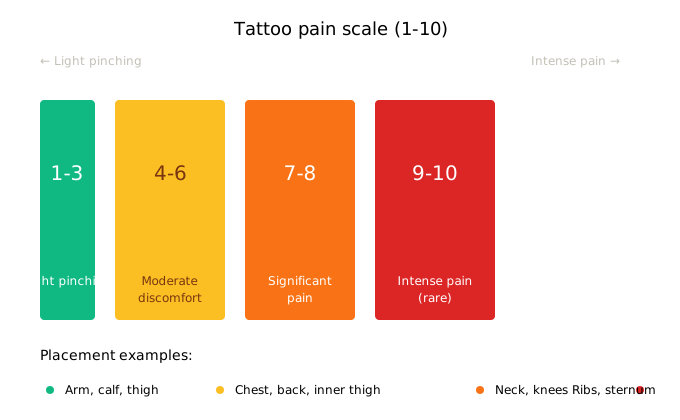
The Tattoo Pain Scale (1-10)
1-3: Light pinching – Feels like a cat scratch
4-6: Moderate discomfort – It hurts, but manageable. You can chat with your artist
7-8: Significant pain – Intense. You'll feel it and might need breaks
9-10: Intense pain – Reserved for sensitive areas. Many people need multiple sessions
Reality check: Pain is subjective. Your best friend might handle ribwork fine while you're gripping the chair. That's completely normal.
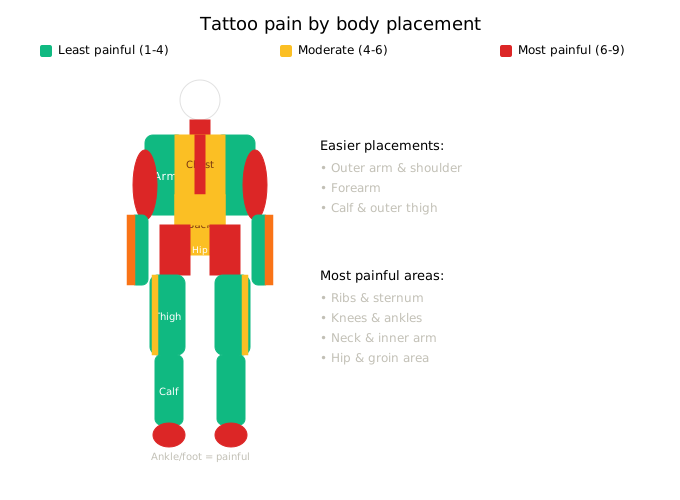
Easiest Places to Get a Tattoo (Pain Level 1-4)
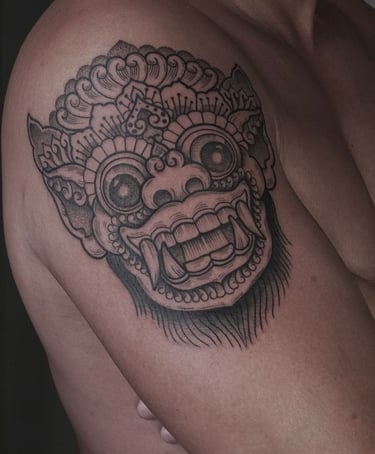
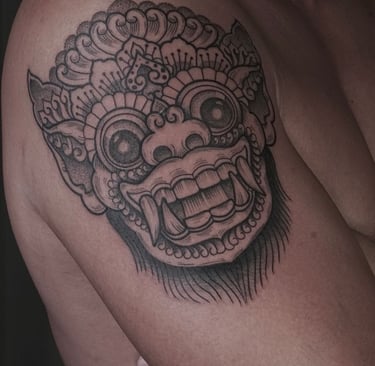
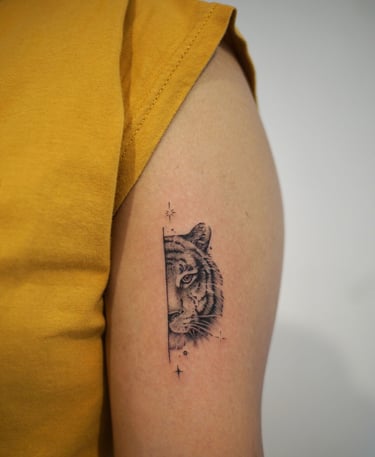
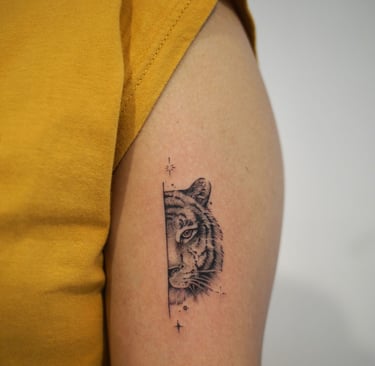
Outer Arm & Shoulder (Pain: 2-3)
This is the sweet spot if you're a first-timer. Your upper arm and shoulder have decent fat padding and aren't loaded with nerve endings. Most people describe it as a mild scratching sensation – kind of uncomfortable but totally manageable.
Forearm (Pain: 2-4)
The outer forearm is another beginner-friendly zone. You've got decent padding, it heals beautifully, and it's not a painful experience overall.
Calf (Pain: 2-3)
Your calf muscle is thick and forgiving. The pain is minimal, and it looks great. Plus it heals well, which is a bonus.
Thigh (Outer) (Pain: 2-4)
Honestly, the outer thigh is one of the least painful places you can get tattooed. There's a lot of cushioning between the needle and bone. Some people say it feels almost meditative – you're lying down, relaxed, and just kind of watching it happen. A few have even fallen asleep during it.
Moderate Pain Placements (Pain Level 4-6)
Chest (Pain: 4-6)
The chest is interesting because it varies depending on where exactly. Upper chest (near your shoulder) is easier – more like forearm level. But as you move toward the sternum, you're getting closer to bone and there's less padding, so it gets more uncomfortable.
It's manageable though. Most people handle it fine as long as they focus on breathing.
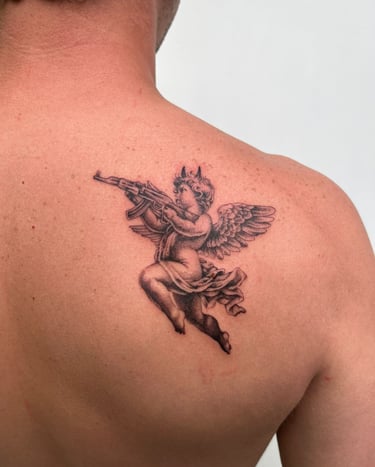
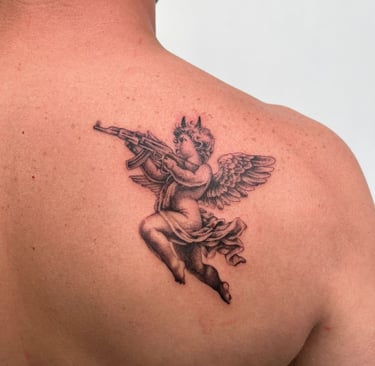
Back (Upper & Middle) (Pain: 3-5)
Your upper back is relatively easy because there's good muscle thickness. The cool thing about back pieces is you get to lie down the whole time, which actually helps you relax. That makes a real difference.
Lower back starts moving into more uncomfortable territory, but overall it's pretty bearable.
Inner Thigh (Pain: 5-6)
The inner thigh has thinner skin and more nerve density than the outer thigh, so it's noticeably more sensitive. You'll definitely feel it, but it's not unbearable. People with tattoos here usually say it's an intensity level they can handle.
High Pain Placements (Pain Level 6-9)
Ribcage/Ribs (Pain: 7-9)
Okay, this is the big one. Your ribs are literally bone with a thin layer of skin and muscle over them. When the needle hits, every single vibration goes straight to bone. It's sharp. It's constant. And when your artist starts shading? That's where it gets intense.
Most people need breaks here. Really. We're talking about limiting sessions to 1-1.5 hours because the pain just keeps building and at a certain point your body is done.
Sternum (Pain: 8-9)
If you're thinking about getting tattooed right down the center of your chest, just know – this is legit one of the most painful placements. It's direct bone contact with basically no padding underneath. It's sensitive as hell.
This is where we usually recommend 30-45 minute sessions max. Your body can handle it for that long, but pushing past that becomes rough.
Neck (Pain: 7-8)
The neck is tricky. The skin is thin, there are a ton of nerves, and you can't really move to get comfortable. Front of neck is worse than the back. You're constantly aware of what's happening, and there's nowhere to hide from the sensation.
Stick to small designs here. And definitely make sure you're experienced with tattoos first.
Knees & Behind Knees (Pain: 7-9)
Your knees are basically a bone joint with skin stretched over it. The kneecap itself? That's intense. Behind the knee is slightly less painful but still pretty rough.
Real talk – keep these small. And most people end up doing multiple sessions for this area because sitting through a longer session just isn't fun.
Inner Arm & Inner Bicep (Pain: 6-8)
Here's the thing that surprises people – the inner arm looks soft and easy, but it's actually packed with nerves. Way more sensitive than the outer arm. Your inner bicep especially.
People describe it as sharp and constant. It hurts more than you'd expect from looking at it.
Intimate Areas & Groin (Pain: 8-9)
If you're thinking hip bones, groin area, or anything in that zone – this is intense. Thin skin, dense nerves, and mentally it's hard to relax. A lot of studios recommend breaking this into multiple shorter sessions instead of trying to power through one long one.
What Actually Affects Tattoo Pain?
So here's the thing – the placement isn't the only thing that determines whether your tattoo session sucks. There's actually a lot going on.
Skin thickness and fat layer is probably the biggest factor. Think about it – your thigh has a thick cushion of fat between the needle and bone. Your sternum? Basically bone with a thin layer of skin over it. That's why thigh tattoos feel like a pinch and sternum tattoos feel like someone's scratching bone. Physics.
Nerve density also matters. Some areas of your body just have more nerves clustered together. Your inner arm? Packed with them. Your outer thigh? Way fewer. More nerves = more pain signals going to your brain.
Then there's individual pain tolerance, which is honestly huge and often ignored. Some people just handle pain better. Some people are more anxious, which makes pain feel worse. Neither is weakness – it's just how your body and brain are wired. If you know you're the anxious type, that's actually valuable information. It means you need to prepare mentally, find ways to distract yourself, maybe ask for breaks.
How long you're sitting in the chair matters too. A tiny tattoo? You're done in 30 minutes, pain is whatever. A full ribcage piece? You're looking at 3+ hours, and pain builds. After 2 hours, your body gets tired, your pain tolerance drops, and everything hurts more. That's why people doing painful placements often split it into multiple sessions. Not because they're wimps – because it's smarter.
Design complexity plays a role. Clean lines hurt less than detailed work with lots of shading. Shading takes longer, the needle moves slower, and you feel it more. Makes sense when you think about it.
And finally – your artist matters. A good artist with experience works efficiently, knows how to adjust needle depth for different areas, and minimizes unnecessary pain. A rushed or inexperienced artist might go over the same spot multiple times or just not have the finesse to make it smooth. This is why choosing the right studio actually makes a real difference. Read more about what makes a quality tattoo studio here.
Pain Management Tips During Your Session
Okay, so you know where it'll hurt. Now let's talk about actually getting through it without wanting to scream.
First thing – breathing. Seriously, this is huge. Most people hold their breath when they're nervous, which makes everything worse. Try this instead: breathe in through your nose for 4 counts, then out through your mouth for 4 counts. Sounds simple? It is. But it works because deep breathing tells your nervous system you're actually okay. Your body relaxes. The pain feels less intense.
Before you even show up, your mindset matters way more than you'd think. Don't spend the night before googling "how much does getting a tattoo hurt" and reading horror stories. That's just asking for anxiety. Instead, come in rested, fed, and hydrated. Seriously – low blood sugar makes pain feel worse. Low energy makes you tense. It all compounds.
Also – and this is important – skip alcohol the night before. It thins your blood, which means you'll bleed more during the session, which messes with the ink staying in and makes the whole thing worse. Same goes for painkillers like ibuprofen. I know you're thinking "Wait, wouldn't painkillers help?" Nope. They thin your blood too. Just skip them.
When you show up, tell your artist what's up. Say "I'm nervous," or "This is my first time," or "I have a low pain tolerance." A good artist – and we've got artists with 15+ years of experience – will adjust. They'll go slower if you need it, take breaks, adapt their technique. They want you to have a good experience because a happy client comes back and tells their friends. Win-win.
During the actual session, grip something. The chair, a stress ball, whatever. Don't watch the needle – seriously, watching makes it way worse for some reason. Your brain freaks out more when you're seeing what's happening. Instead, chat with your artist. If you're talking, you're distracted. That's the whole point.
And look – if you need a break, ask for one. There's zero shame in it. Your artist has seen everything. Take 5 minutes, breathe, drink some water, and you're ready to go again.
After Your Tattoo: What Recovery Actually Feels Like
Once the needle stops, the sensation doesn't immediately disappear. Your tattoo will be throbbing and tender for a bit – that's completely normal. It's basically a fresh wound, and your body is doing what it's supposed to do.
First few hours: Expect throbbing and tenderness. This is the worst of it.
Days 1-3: Still pretty tender. This is when it bothers you the most. If the pain is increasing instead of decreasing, or if you're seeing red streaks or excessive swelling, that's not normal – reach out to your artist.
Days 4-7: It'll start flaking (don't pick at it), and the tenderness improves. You're on the right track.
Week 2: Significantly better. You can usually get back to your normal activities.
Weeks 3-4: Mostly healed. Just keep being careful with sun exposure and water.
If you're traveling while getting tattooed (which a lot of people do in Bali), check out our detailed guide on aftercare for travelers it covers everything you need to know.
Ready to Get Your Tattoo?
Here's the thing – yeah, it will hurt. But you're not the first person to sit through it, and you won't be the last. Thousands of people get tattooed every year, and most of them survive. Seriously.
The real key is knowing what to expect, picking an artist who actually knows what they're doing, and going in with your head on straight. Our artists have 15+ years of experience. They know how to work with different pain thresholds, when to take breaks, and how to minimize unnecessary discomfort while still delivering quality work.
If you're thinking about getting a tattoo – whether it's something small on your arm or something bigger – just come talk to us. No pressure. We'll walk you through what you're getting into, answer your questions, and make sure you're actually ready for it.
Book a free consultation with our studio – We'll figure out your design, talk through the pain stuff, and get you ready.
Related Reading
Contact us
© 2025. All rights reserved.
Opening Hours (Everyday)
10 AM - 6 PM